When to File a Section 5 Declaration
If you are unsure whether your project needs planning permission, you do not have to guess. You can ask your local authority for a formal written answer known as a Section 5 declaration in return for a small fee. The council must respond within 4 weeks, and its answer is recorded on the public planning register.
A Section 5 declaration settles one question: whether particular works are or are not exempted development. When considering a home improvement that is thought to be exempt, the declaration offers the certainty to start an SEAI grant application and is a written record, confirming the status of the works in future — including if you were ever selling your home.
Two things to understand before you apply. A declaration is not planning permission — if the answer is “not exempt”, you will need to apply for permission in the normal way. And the request, along with the council’s answer, becomes a public record. Both points are covered in more detail below.
What Is a Section 5 Declaration?
The name comes from Section 5 of the Planning and Development Act 2000, which gives any person the right to request a declaration from the relevant planning authority on whether a particular development is or is not exempted development.
Exempted development is building work that can be carried out without planning permission, provided defined limits and conditions are met. The limits for extensions, garages, sheds, porches and other common works are covered in our guide to exempted development in Ireland. Most projects sit comfortably on one side of the line or the other. The Section 5 process exists for marginal cases where the answer is not clear, or where a homeowner requires more certainty about the planning status before investing in expensive improvements.
The declaration is issued in writing, with the main reasons for the decision, and the details are entered in the planning register. That written record is what gives the declaration its value — to you, to a future buyer, and to their solicitor.
When Is It Worth Asking?
In practice, a Section 5 declaration earns its fee in a handful of recurring situations.
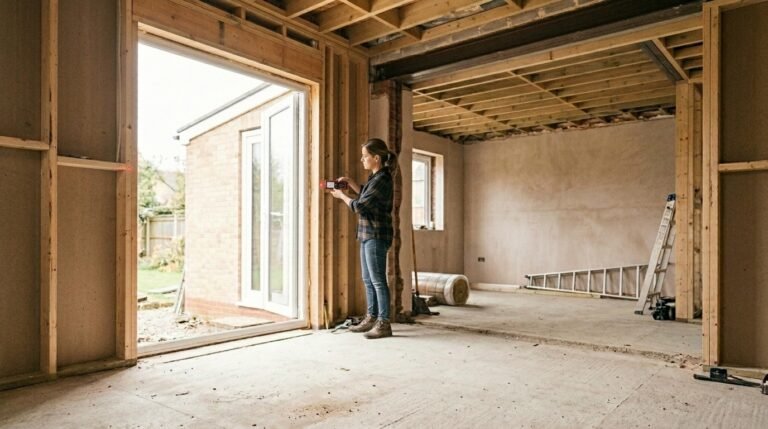
Your works are close to an exemption limit. The exemptions come with precise conditions — floor areas, heights, boundary distances, open space requirements — and the conditions interact. If your extension design is within a metre or a square metre of any limit, a declaration removes the doubt before you commit to construction costs.
The exemption turns on a judgement call. Some conditions are not a number but a matter of degree — whether replacing a garage door with a window and new walling “materially affects” the external appearance of the house, for example. You can take a view on a measurement yourself. You cannot safely take a view on what a planning authority will consider a material change in appearance. A Section 5 declaration removes that subjectivity.
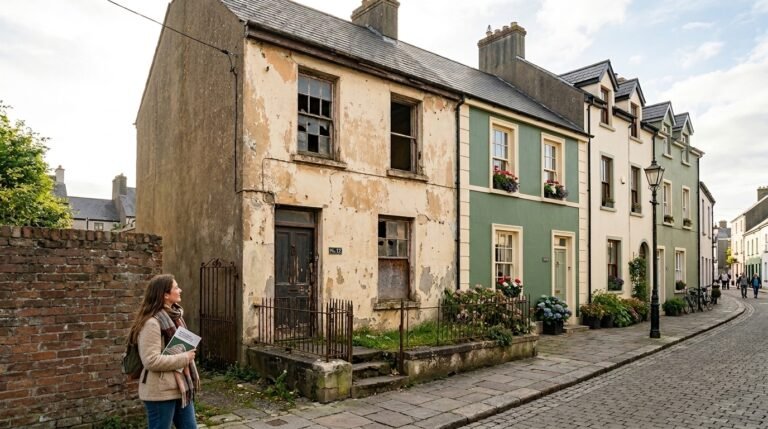
You are converting or changing the use of a building. Whether a change of use is “material” — and therefore needs permission — is one of the most common grey areas in the Irish planning system. A declaration settles it.
You are buying a property with previous works. If the house you are buying has an extension, attic conversion or converted garage and the seller cannot produce planning permission for it, a declaration that the works are exempt resolves the question. Solicitors regularly advise this route during conveyancing.
You are selling, and a buyer’s solicitor has raised a query. The same logic in reverse. A declaration confirming that works to your house were exempt can keep a sale moving.
When a Section 5 Is Not the Right Tool
A declaration tells you what the law already says about your works. It cannot make non-exempt works exempt, and it is not a way of seeking permission by the back door. If you already know the works exceed the exemption limits, do not spend €80 confirming it — prepare a planning application instead.
Protected structures have their own, separate declaration process — under Section 57 of the same Act — covering which works would affect the character of the structure. If your property is a protected structure, that is the process to ask your council about, and it is not something to navigate without appointing a conservation architect.
How Do I Apply?
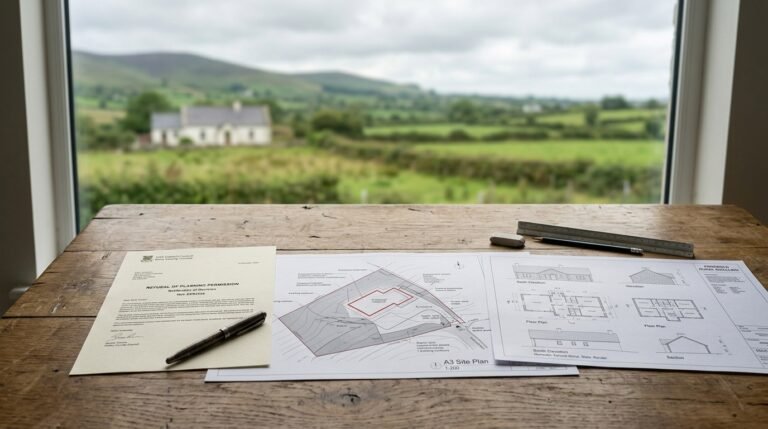
You apply in writing to the planning authority for the area where the property sits. Most councils provide an application form on their website. You will need:
- A written description of the works or the question — what exactly you propose to do, or have done.
- A site location map identifying the property.
- Drawings, photographs or any other information needed to understand the works. For anything beyond very minor works, include a set of drawings.
- The fee, usually €80 — but check current fees with your local council before applying.
Be precise about the question you ask. The council answers the question put to it, on the facts you supply and nothing more. A declaration that a 38 square metre extension is exempt does not cover the 42 square metre version you build later, and a declaration obtained on an inaccurate description offers no protection at all. If the works described and the works built do not match, the declaration is worthless.
You are also obliged under the Act to provide any information the council needs to make its decision. Vague requests produce slow answers, requests for further information, or declarations hedged to the point of being useless.
How Long Does the Council Have?
The planning authority must issue its declaration within 4 weeks of receiving your request.
If it needs further information, it can ask for it and must then issue the declaration within 3 weeks of receiving that information. For exceptionally complex cases, the council can extend the timeline, but it must write to you before the 4 weeks expire, explain why, and give you the date by which it intends to decide.
The declaration, your request and the supporting documents are then published on the council’s website for at least 8 weeks, and the details are entered permanently in the planning register.
What If I Disagree With the Answer?
A declaration can be referred to An Coimisiún Pleanála (formerly An Bord Pleanála) for review. You must refer it within 4 weeks of the declaration issuing, and the fee is €220. The Commission examines the question afresh and its decision replaces the council’s.
If the council simply fails to answer within the time allowed, you have the same option — refer the question to the Commission within 4 weeks of the date the declaration was due. However, having patience with your local council is usually the better route before escalating.
The planning authority can also refer a question to the Commission itself where it considers the matter genuinely unclear. This happens with novel or contentious questions.
One Thing People Miss: Anyone Can Ask
The right to request a declaration is not limited to the property owner. “Any person” can ask the council whether works on any land are exempted development — including your neighbour asking the council about your extension.
This cuts both ways. It means you can seek certainty about works on a property before you own it. However, it also means a dispute with a neighbour can arrive in the form of a Section 5 request about your works, and the council’s answer will be on the public record. If you have built close to the limits, a declaration you sought yourself — before anyone else asked the question — is a far better position to be in.
The Law Is Changing — But Not Yet
The Planning and Development Act 2024 will eventually replace Section 5 with a new declaration system. Those provisions have not yet been commenced, and declarations issued under Section 5 will carry over and remain valid when they are. Until the new provisions take effect, the process described in this article is the law. We intend to update this article when that changes.
When Should I Get Professional Advice?
A Section 5 request is one of the more accessible planning processes — many homeowners complete it without help. The risk is not the form. It is asking the wrong question, or describing the works loosely enough that the answer does not protect you.
If the works are complicated, if the exemption turns on a judgement call, or if the declaration matters to a sale or purchase, have a planning consultant or architect frame the question and prepare the drawings. The council can only answer what you ask. Getting the question right is where the professional earns their fee.
If the council’s answer is “not exempt”, the next decision is yours: revise the proposal to bring it within the exemption limits, or apply for planning permission. A professional can tell you which is the shorter road for your particular project.
This article is intended as general guidance only and is not a definitive legal interpretation of planning law. Always check the position with your local planning authority before proceeding with any works.