Exempted Development in Ireland: What You Can Build Without Planning Permission
A lot of building work around the house does not require planning permission. Irish planning law exempts a wide range of minor works — provided you stay within defined limits. These are called exempted developments.
This guide covers the most common exemptions relevant to homeowners: extensions, garage conversions, outbuildings (sheds, garages, office pods), porches, solar panels, heat pumps, and a few others that regularly cause confusion.
The Government revised exemption regulations in April 2026 and these changes are summarised at the end of the article. The figures in this article are the limits that apply today.
What Is Exempted Development?
Exempted development is development for which planning permission is not required. The exemptions are set out in the Planning and Development Act 2000 (as amended) and the associated Planning and Development Regulations 2001 (as amended).
Exempted does not mean unregulated. Every exemption comes with floor area limits, height, position, finish, or use. Fail to comply with those conditions, and the exemption no longer applies. You could end up in breach of planning law and may end up in a costly battle with your local council to retain what you’ve built.
It is very important to remember that while some building works are exempt from planning permission the Building Regulations will apply in full to any habitable space created. A loft conversion, extension or converted garage must meet the standards set for habitable rooms on insulation, energy performance, ventilation, fire safety, sanitation, and structural stability regardless of whether planning permission is needed or not.
Can I Build an Extension?
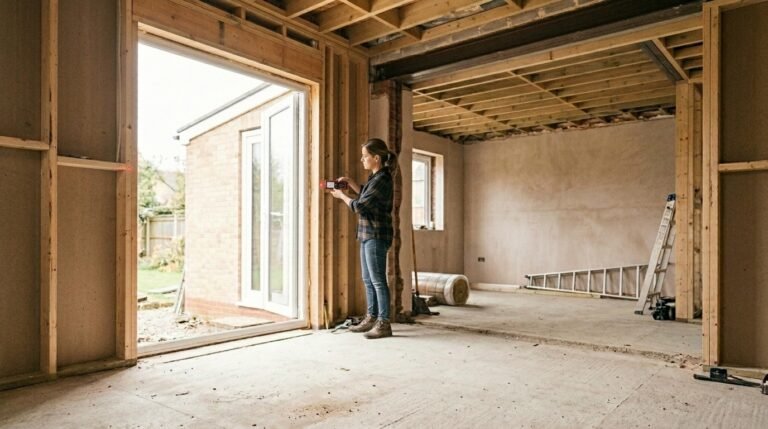
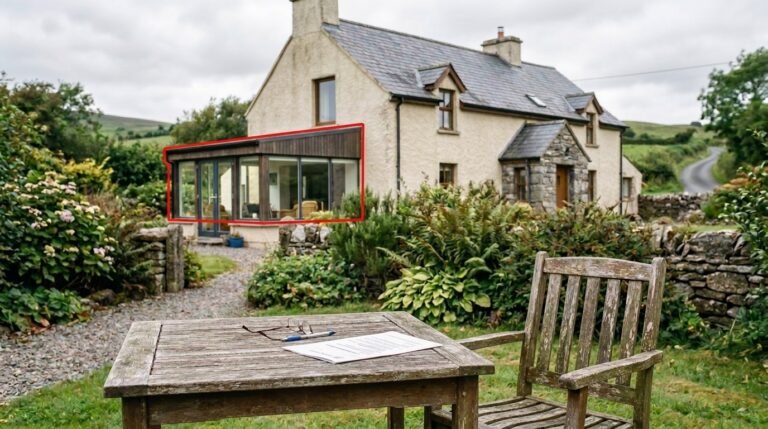
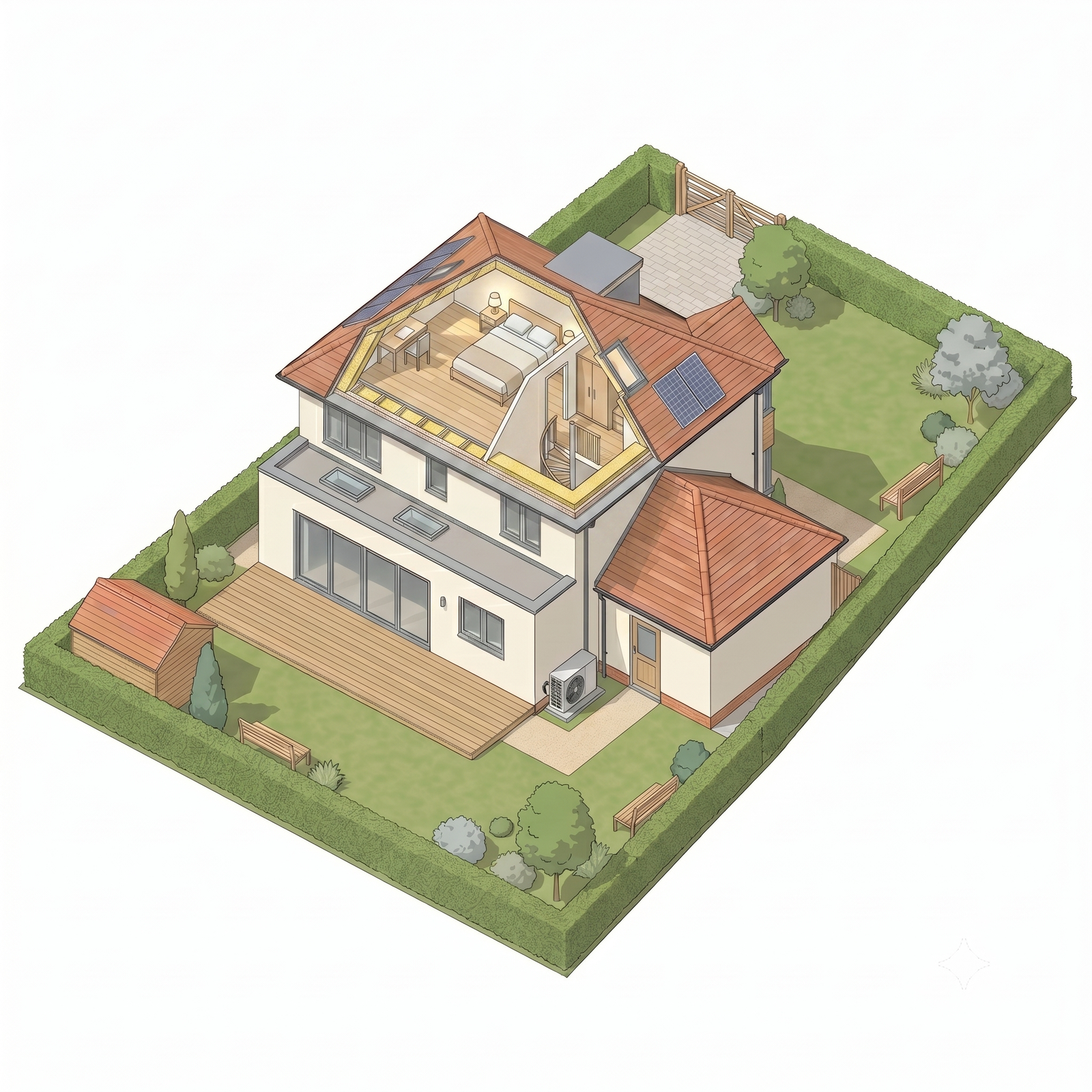
You can extend your house without an application, provided the total increase in floor area does not exceed 45 square metres. This is a cumulative limit. It covers all extensions built since 1 October 1964, including any for which planning permission was previously granted. If an earlier extension of 25 square metres already exists, you can add no more than 20 square metres before you need to make an application. Attached Garage Conversions are also considered as extensions and consume the 45 square metre limit.
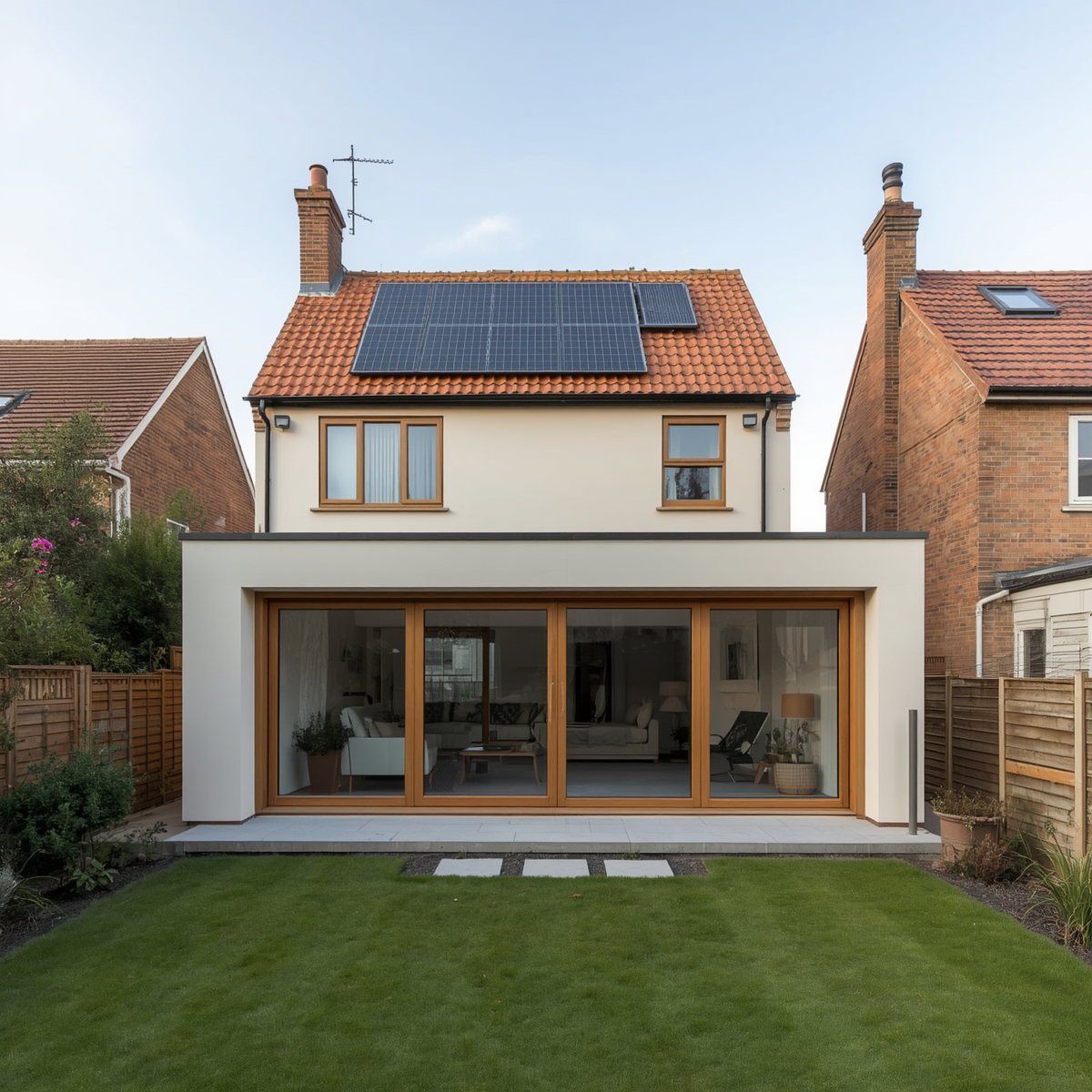
There are also separate limits on how much of that extension can be above ground floor level:
- For terraced or semi-detached houses, no more than 12 square metres of upper-floor extension is allowed.
- For detached houses, the upper-floor limit is 20 square metres.
Several other conditions apply:
- The extension must be to the rear of the house.
- It cannot exceed the height of the main house. Where the roof slopes down to the rear, this means not building above the eaves. Where there is a gable end to the rear, the roof of the extension must not protrude past the highest point of the roof.
- Any upper-floor element must be at least 2 metres from any party boundary.
- The extensions, taking into account existing sheds, must not reduce your remaining private open space below 25 square metres.
- Windows at ground floor must be 1 metre away from a boundary.
- Upper-floor windows must be at least 11 metres from the boundary they face.
- The roof cannot be used as a balcony or roof garden.
- The extension cannot be used to create a separate dwelling; subdividing a dwelling always requires planning permission.
Watch the open space requirements and boundary distances carefully. Houses in constrained urban or suburban settings often have a small overlooked garden. Boundaries can be closer than 11m restricting upper floor windows and a large ground-floor extension could breach the 25 square metre minimum open space requirement before you reach the floor area limit especially if there is an existing shed.
Can I Convert My Garage?
It depends on whether the garage is attached to the house or detached from it.
An attached garage — to the side or rear of the house — can generally be converted to domestic use, such as a living room, bedroom or home office, without planning permission. The conversion counts towards the same 45 square metre cumulative extension limit described above. If previous extensions have already used up that allowance, the conversion will need permission.
If the conversion involves significant changes to the front of the house — replacing a garage door with a window and new walling on the front elevation, for example — the works may materially affect the external appearance of the house. In that case, the exemption may not apply. A Section 5 declaration from your local authority (explained below) will settle the question before you commit.
Can I Build a Garage, Shed or Outbuilding?
You can build a garage, shed, greenhouse or similar structure, subject to the following:
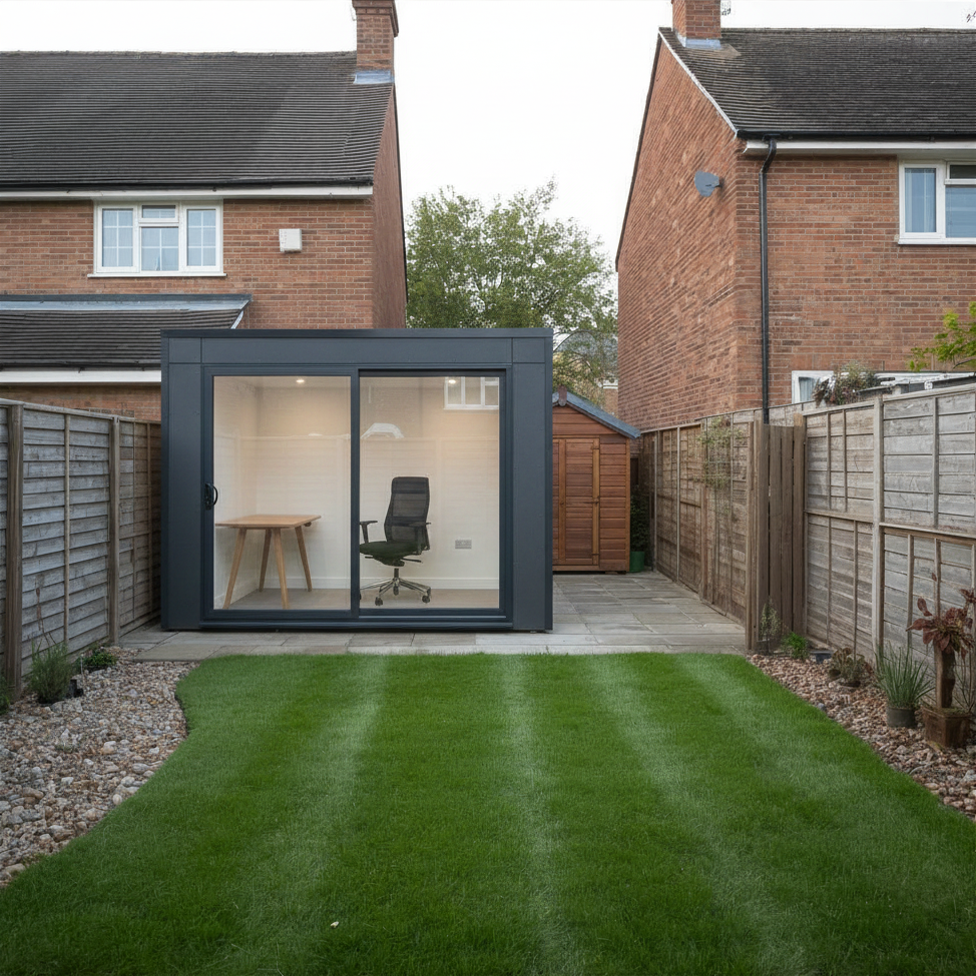
- The structure cannot extend forward of the front wall of the house.
- Height cannot exceed 4 metres for a tiled or slated pitched roof, or 3 metres for any other roof type (e.g. flat roofs).
- The total floor area of all such structures on the site cannot exceed 30 square metres.
- Any structure built to the side of the house must match the external finish of the house, including the roof where it has a tiled or slated finish.
- It must not reduce your private open space below 30 square metres.
The 30 square metre limit applies in aggregate. If you already have a garden shed of 10 square metres, your new garage cannot exceed 20 square metres.
The exemption that allows you to build a garden structure specifically excludes use for human habitation. Converting a detached garage into a bedroom, granny flat or self-contained living space is a material change of use and may require planning permission, refer to the new Class 3A (Detached Auxiliary Dwelling) exemption described below. Unfortunately, this is one of the most common misunderstandings in the Irish planning system: a structure that was exempt to build is not automatically exempt to live in.
Can I Build a Front Porch?
A front porch is the only structure that can extend beyond the front wall of the house and remain exempt. The conditions are:
- No more than 2 square metres in area.
- At least 2 metres from any public road or footpath.
- No more than 4 metres in height (tiled or slated pitched roof), or 3 metres for any other roof type.
If your intended porch exceeds any of these limits, a planning application is required.
Can I Install Solar Panels?
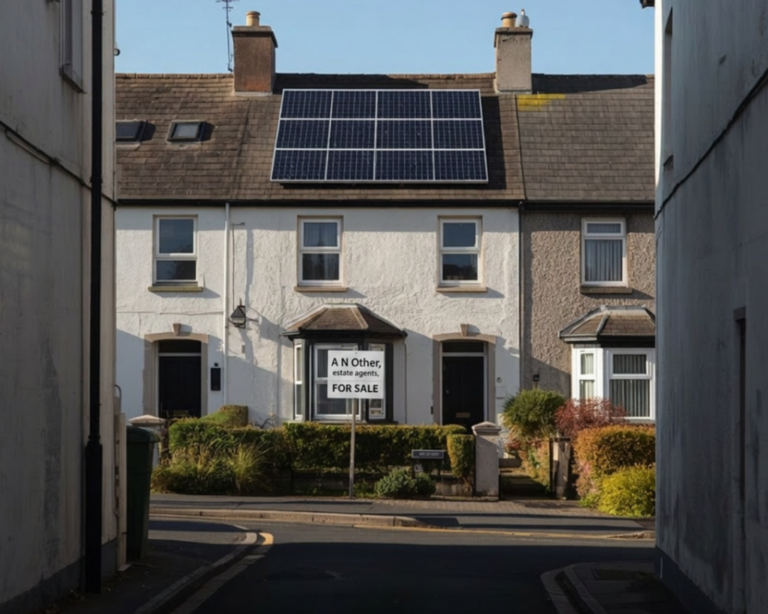
Solar panels on a house roof are exempt, provided:
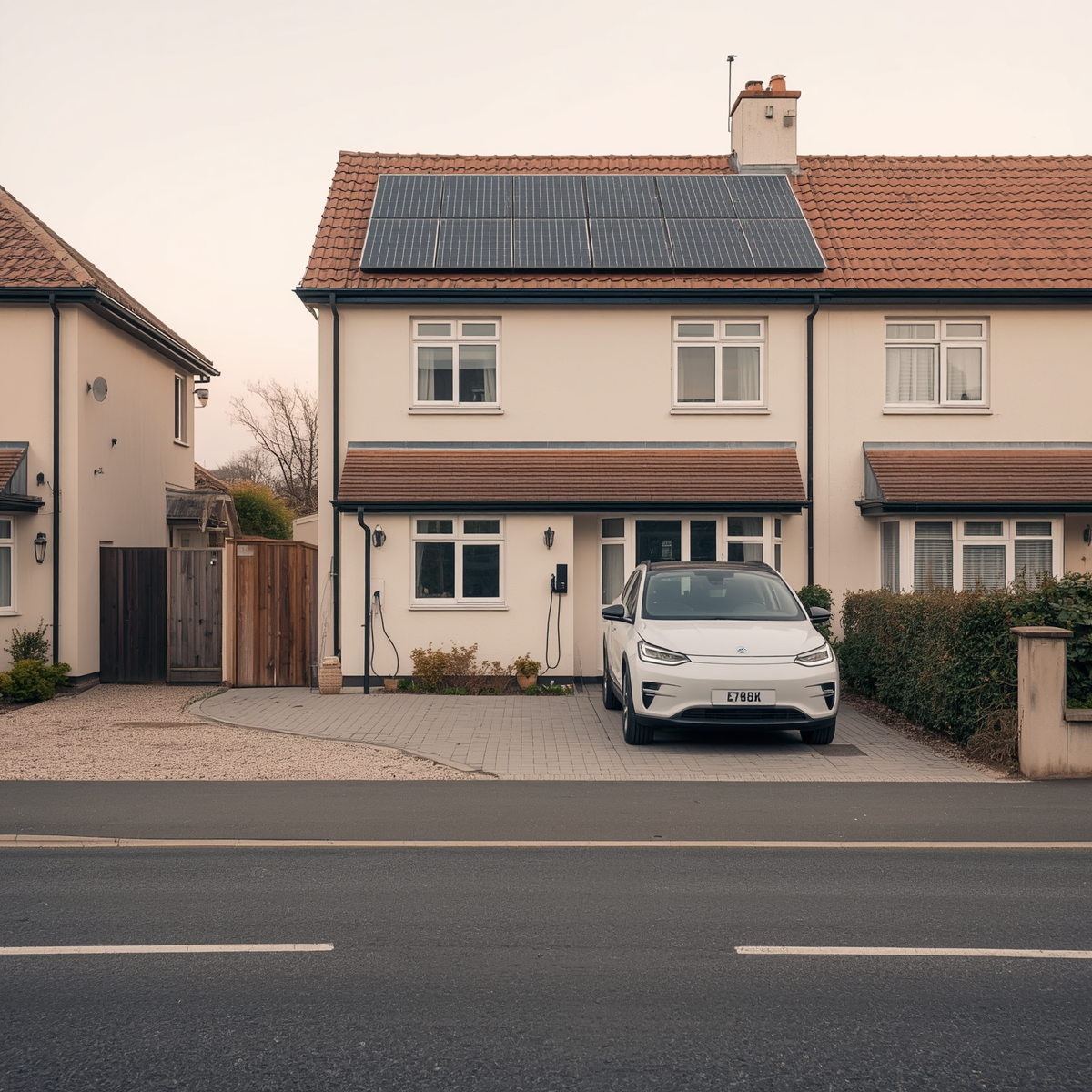
- The panel is at least 50 centimetres from the edge of the roof.
- The gap between the roof surface and the panel does not exceed 15 centimetres (or 50 centimetres in the case of a flat roof).
Free-standing solar installations in the garden are also covered, subject to different conditions: height cannot exceed 2.5 metres, the total aperture area of all free-standing panels on the site cannot exceed 25 square metres, and the installation must not reduce your private open space below 25 square metres. It cannot be positioned forward of the front wall of the house.
The exemption does not apply to protected structures — buildings listed on the Record of Protected Structures in your local authority’s development plan. It also does not apply in an Architectural Conservation Area (ACA) where the works would materially affect the character of the area. If either applies to your property, check with your local planning authority before proceeding.
There are some restrictions in Solar Safeguarding Zones (SSZs). These are areas around airports, aerodromes and similar sites where rooftop solar can cause hazardous glare. There are 43 SSZs across Ireland. However, these restrictions apply to commercial properties with large solar arrays (in excess of 300m²) and not to homeowners.
Can I Install a Heat Pump?
An air source or ground source heat pump can be installed to the front, rear or side of the house, or on a roof, without planning permission, provided:
- The total area of the heat pump, together with any heat pump already installed, does not exceed 2.5 square metres.
- If mounted on a wall or roof, the unit is at least 50 centimetres from any edge of that wall or roof.
- Any ground works do not alter the ground level by more than 1 metre above or below the adjoining ground.
- Noise from the unit does not exceed 43 decibels during normal operation, or 5 decibels above background noise, whichever is greater, measured from the nearest neighbouring inhabited dwelling.
The noise condition is the one most often overlooked. It is not a one-off test at installation — the exemption depends on the unit staying within those levels in normal operation. Position the unit thoughtfully, away from a neighbour’s bedroom window, and ask your installer to confirm the sound power level of the model before you buy.
The Government has proposed removing the restriction on positioning, which would allow heat pumps to the front of the house. However, that change is not yet law. For now, a heat pump to the front requires planning permission.
Can I Erect Walls, Fences and Gates?
The height limits are:
- To the front of the house: no more than 1.2 metres.
- To the side or rear: no more than 2 metres.
Permitted materials include brick, stone or block with a decorative finish, railings and timber fences. Metal palisade or security fencing is not permitted. Plain concrete block walls must be rendered or plastered.
Check your planning permission before erecting any boundary structure. Some permissions — particularly for rural houses — include conditions specifying the type of boundary treatment required. Where such a condition exists, the general exemption does not apply.
You will need planning permission to create a new or wider access to a public road, regardless of the boundary treatment involved.
Small Works and Other Exemptions
Internal alterations are generally exempt, provided they do not change the domestic use of the house.
Sub-division of the principal dwelling now has its own exemption (Class 1A): you may create up to one additional self-contained unit within the existing building envelope, provided each unit has a minimum floor area of 32 square metres. You must notify your planning authority at least 14 days before work begins. This exemption is time-limited and expires on 31 December 2030.
External repairs and maintenance — painting, re-plastering, replacing windows like-for-like — are exempt as long as they do not materially affect the external appearance of the house in a way that would be inconsistent with neighbouring buildings. Plastering the front elevation of a house in a brick terrace, depending on the context, would likely require permission.
Satellite dishes up to 1 metre in diameter are exempt, provided they are to the side or rear of the house and below the top of the roof. Only one dish is allowed per house. A dish to the front always requires permission.
External wall insulation is now exempt, in line with existing SEAI grant provision. Homeowners carrying out external insulation as part of an energy upgrade do not need planning permission for the insulation itself.
Cycle and bin storage structures are now exempt, whether at the front or rear of the property. The exemption covers a structure with capacity for three to four adult bicycles, two cargo bicycles, or three wheelie bins.
Oil storage tanks of up to 3,500 litres, boiler houses and chimneys provided as part of a central heating system are also exempt.
Can I Add a Detached Habitable Unit to My Garden?
A new exemption (Class 3A) allows for a Detached Auxiliary Dwelling (DAD) — a self-contained habitable unit to the rear of the principal house, linked to its services. The key conditions are:
- The unit must be to the rear of the principal house.
- The floor area must be between 32 and 45 square metres.
- The unit must be connected to the services of the principal house.
- You must notify your planning authority at least 14 days before work begins.
- Building Regulations, including those for habitable dwellings, apply in full.
This exemption is time-limited and expires on 31 December 2030. It is a significant change: previously, any detached habitable structure required a full planning application. However, the notification requirement means the planning authority will have a record of the development, and structural quality, fire safety, and the BCAR process remain fully in force.
A 32–45 sq m unit must meet the same Building Regulations standards as any habitable space — insulation, ventilation, fire safety, and structural stability. Always engage a competent building professional before commencing.
When the Exemptions Do Not Apply
Even development that would normally qualify as exempt can lose that status in certain circumstances. These include where the works would:
- Contravene a condition of an existing planning permission on the property.
- Endanger public safety by obstructing sight lines for road users.
- Extend forward of the building line (a small porch is the only exception).
- Involve a new or wider access to a public road.
- Affect a protected structure, a proposed protected structure, or an archaeological monument.
- Fall within a Special Amenity Area.
- Involve any works to an unauthorised structure — one built without planning permission and without exempted status.
That last point is worth noting if you are buying a property. If an existing extension was never properly authorised, further work to it may not benefit from the exemptions, even if the work itself would otherwise qualify.
Do These Exemptions Apply to Apartments?
Most do not. The exemptions covering extensions, garages, sheds, porches, wind turbines, satellite dishes and caravan storage apply to houses only.
Solar panels on apartment rooftops are exempt, subject to conditions — including the SSZ restrictions described above.
What Happens If You Exceed the Limits?
If you carry out works that fall outside the conditions, you have engaged in unauthorised development. Your local planning authority can require you to remove or alter the works.
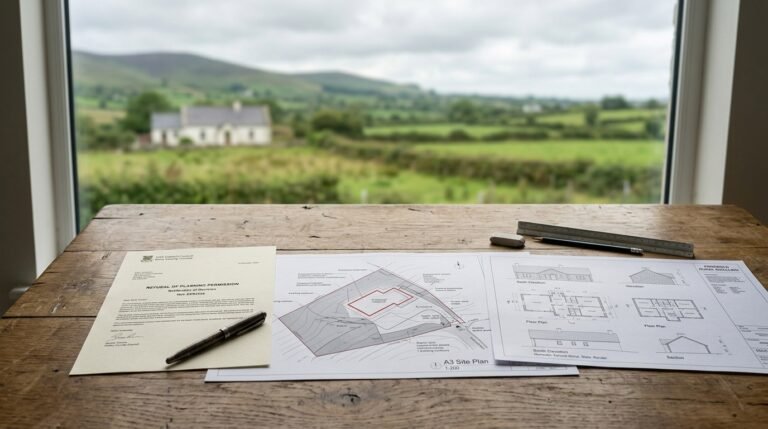
You can apply for retention permission — that is, permission to keep work already carried out, but it is not guaranteed. The application fee is three times the standard rate, and you may also be required to reinstate the site.
Unauthorised development can make it difficult or impossible to sell your property, particularly where a solicitor or buyer’s surveyor identifies a discrepancy during conveyancing.
What Changed in July 2026
Seven Statutory Instruments (SI 338–344 of 2026), signed under Circular PLR-02, came into force on 27 July 2026. They represent the first significant revision of the exempted development thresholds in almost 25 years. The changes reflected in this article are:
- The extension floor area limit increased from 40 to 45 square metres.
- The garden structure floor area limit increased from 25 to 30 square metres.
- Heat pumps may now be installed to the front, side or rear of the house (previously rear and side only).
- A new exemption (Class 1A) allows sub-division of the principal dwelling to create one additional self-contained unit (minimum 32 sq m each), with 14 days’ notice to the planning authority. Expires 31 December 2030.
- A new exemption (Class 3A) allows a Detached Auxiliary Dwelling of 32–45 sq m to the rear, with 14 days’ notice. Expires 31 December 2030.
- A new exemption covers external wall insulation in line with SEAI grant provision.
- A new exemption covers cycle and bin storage at the front or rear.
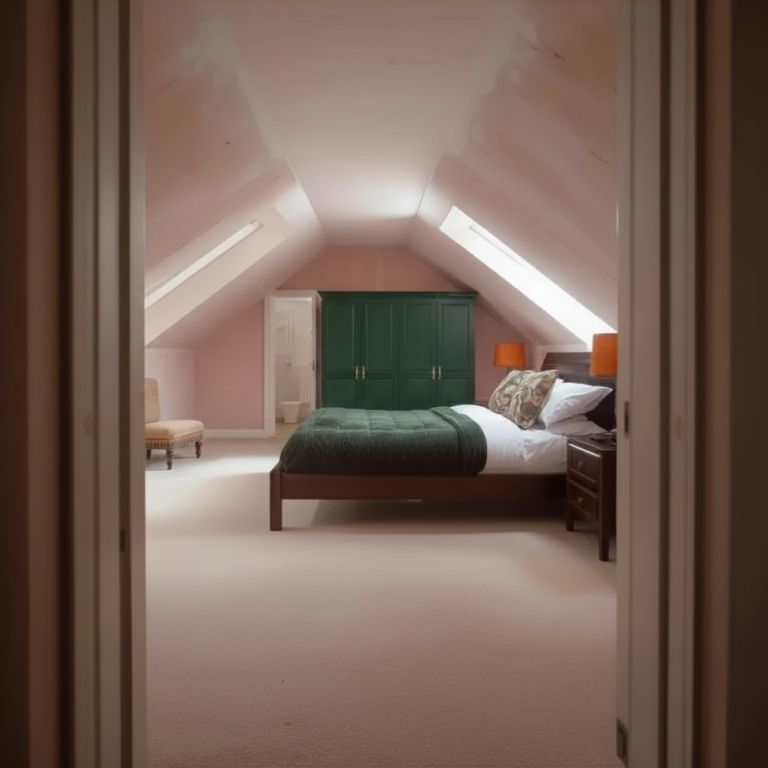
- A new exemption covers dormer roof boxes and rooflights added to the principal dwelling.
The conditions for each exemption — particularly the notification requirements and expiry dates for Class 1A and Class 3A — are set out in detail in SI 338–344 of 2026 and should be read carefully before work begins.
When Should I Get Professional Advice?
The conditions interact with each other. A ground-floor extension that is fine on its own may breach the open space requirement when combined with an existing outbuilding.
If your property is a protected structure, within an Architectural Conservation Area, on a site with existing planning conditions, or involves work that is anywhere near the limits, get professional advice before you proceed. A planning consultant or architect can assess your specific circumstances and tell you clearly where you stand.
Your local authority’s planning department can also issue a formal declaration — known as a Section 5 declaration — confirming whether a particular development is or is not exempt. There is a fee for this service, and the written answer can save you a great deal of trouble later.
This article is intended as general guidance only and is not a definitive legal interpretation of planning law. Always check the position with your local planning authority before proceeding with any works.